One song inside a conversation with Cohen
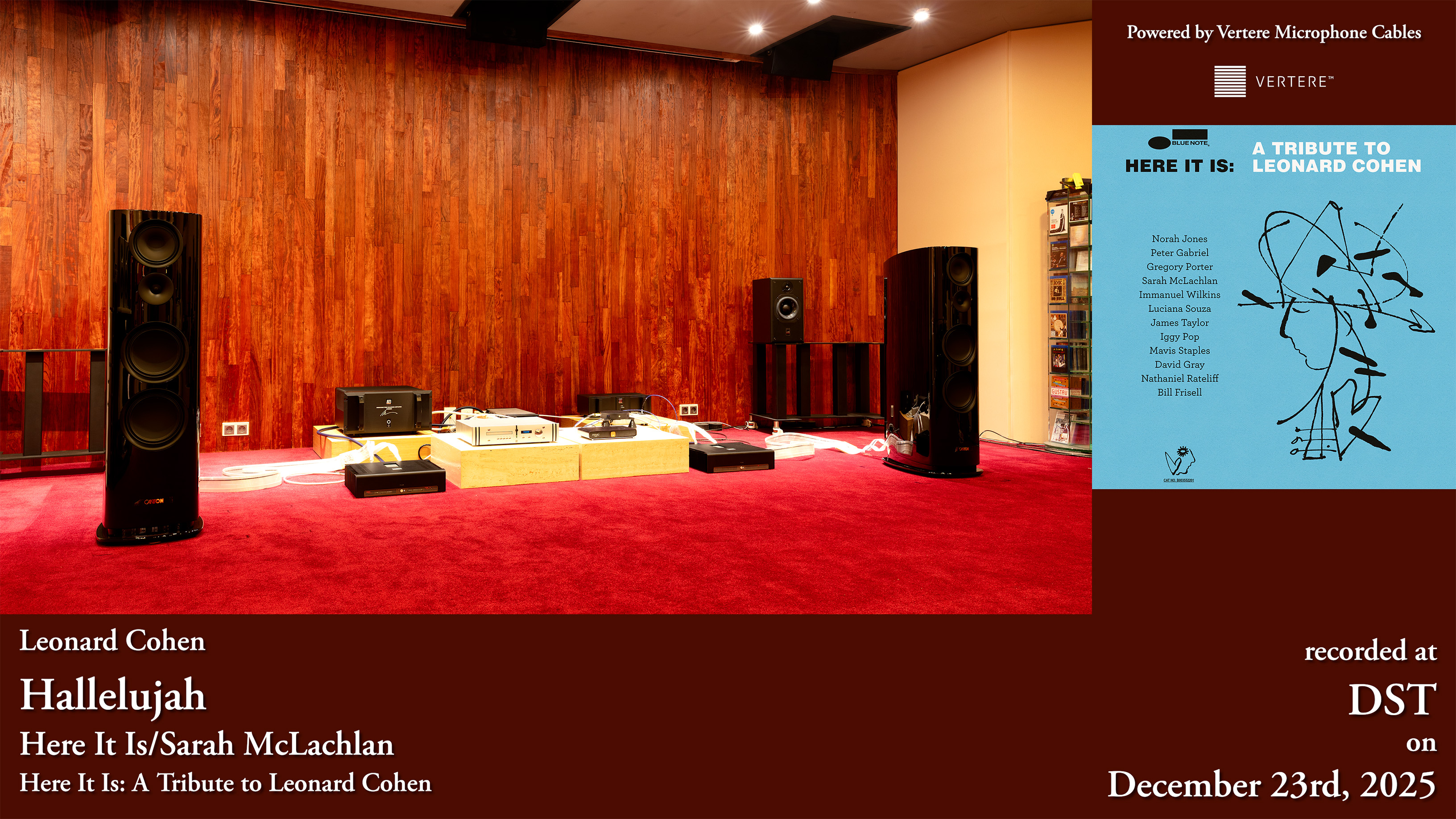
Sarah McLachlan’s reading of “Hallelujah” belongs to Here It Is: A Tribute to Leonard Cohen, produced by Larry Klein and released by Blue Note in 2022. Blue Note places it fourth in a twelve-track sequence, among interpretations by singers including Norah Jones, Peter Gabriel, Gregory Porter, James Taylor and Mavis Staples.1
The album’s continuity also comes from its backing quintet: Bill Frisell, Immanuel Wilkins, Kevin Hays, Scott Colley and Nate Smith. That context suggests a useful first pass. Hear McLachlan’s performance as one chapter in a larger tribute rather than as an isolated version competing with the song’s many other lives.1
HFI used the 96 kHz/24-bit Blue Note edition released on 14 October 2022. Leonard Cohen wrote the song, and Sarah McLachlan performs this version.1
Follow the performance before the system
Begin with the complete arc of the track. Stay with the words and the pace of each phrase, then notice how the instrumental setting gives the vocal line room or gathers around it. Keep those musical relationships connected as attention moves through the performance.
On a second pass, shift attention between the centre of the performance and the supporting players. The question is whether those changes of focus remain easy to follow without breaking the song into disconnected details.
Three ways, four drivers and a down-firing port
A Volumio Primo fed an ATC CDA2 Mk2, used here as DAC and preamplifier. Schiit Tyr monoblocks drove Canton Reference 2 loudspeakers.
Canton specifies the Reference 2 as a three-way bass-reflex design. Its published driver map combines one 25 mm tweeter, one 174 mm midrange driver and two 219 mm woofers, with the reflex outlet firing downward.2
Use that map to organise one more listen: begin with the low foundation, move to the range carrying the vocal body, and then follow upper detail. Afterward, return to the track as a whole. The specification defines the loudspeaker’s architecture; the video lets each listener decide what remains musically coherent.2
A December session at Damino
HFI recorded the session at Damino Sound Technology on 23 December 2025. A matched pair of DPA-4011 microphones fed a Zoom F8n Pro at 192 kHz/32-bit float.
A laser distance meter matched the microphones’ distances from the loudspeakers at the position where that pair most closely captured the sound heard at the sweet spot. That microphone-dependent position is not necessarily the physical listening seat.
Put on headphones and sit in the sweet spot. Let McLachlan’s performance unfold once without analysis, then return for the quieter relationship between voice, ensemble and room.
Watch and listen
The complete HiFi Immersion video
For the clearest sense of the room, listen on headphones at a comfortable, consistent level.