The concerto’s compact centre
Beethoven’s Triple Concerto gives piano, violin and cello a rare shared stage. Beethoven-Haus documents its three-movement plan—Allegro, Largo, then Rondo alla Polacca—while Deutsche Grammophon times this performance at roughly eighteen, five and fourteen minutes. At about five minutes, the central Largo becomes a compact bridge between two expansive movements, easing out of the first and quietly preparing the finale.12
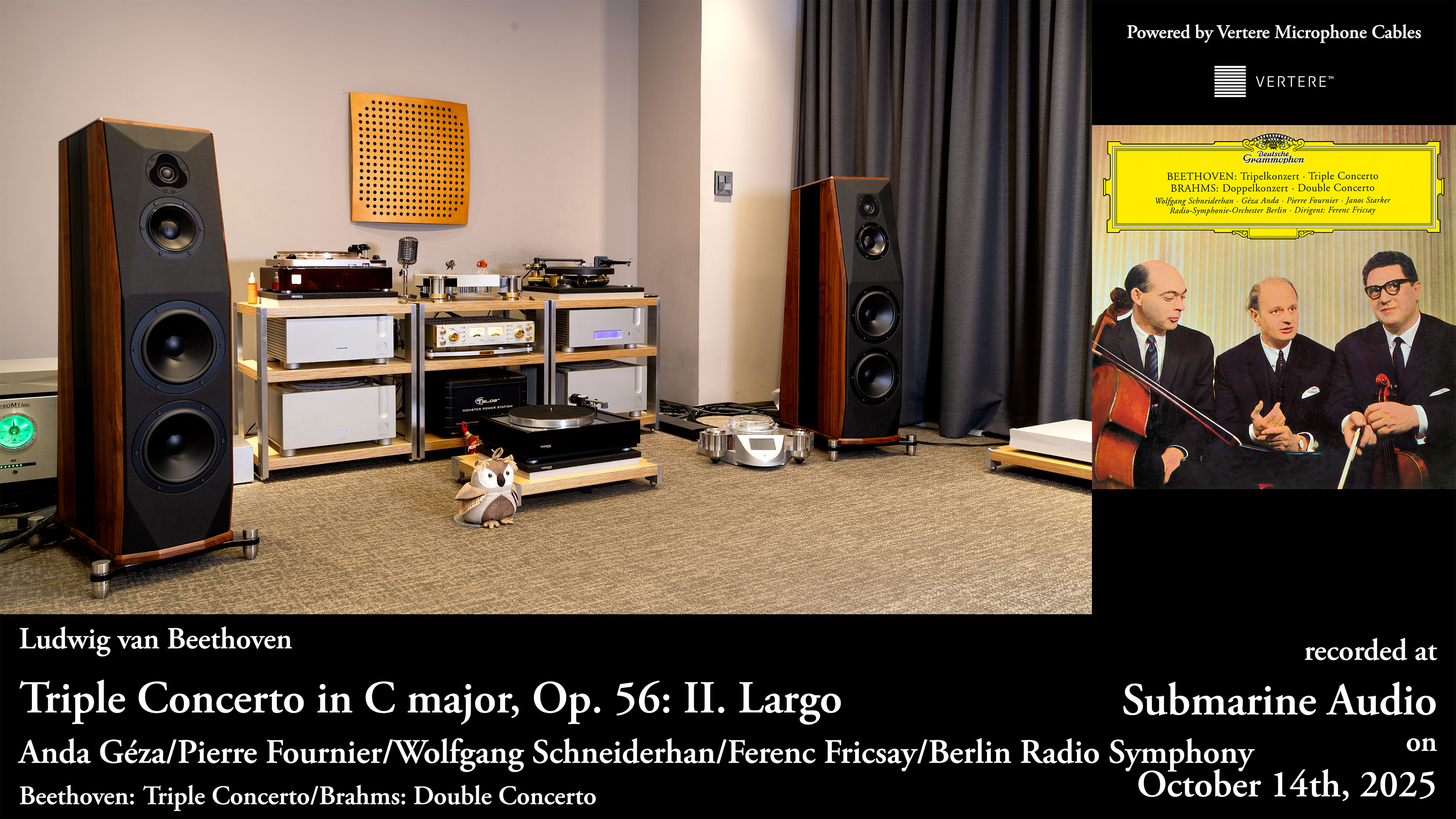
This session used a 96 kHz/24-bit Deutsche Grammophon edition released on 1 October 1999. Géza Anda, Wolfgang Schneiderhan and Pierre Fournier perform with the Radio-Symphonie-Orchester Berlin under Ferenc Fricsay.
Deutsche Grammophon dates the original recording to 1960 at Berlin’s Jesus-Christus-Kirche. In the Largo, the pleasure is not simply that three celebrated soloists are present. It lies in following how a concerto written for three very different instruments can briefly feel like chamber music held inside an orchestral frame.
A transformer-linked amplification path
A Kalista DreamPlay Stream served as network transport. It fed a Ypsilon PST-100 Mk2 preamplifier and Ypsilon Aelius II mono power amplifiers, which drove Peak Consult El Diablo loudspeakers.
Both Ypsilon stages use transformer coupling. The PST-100 Mk2 combines transformer attenuation with a no-feedback, transformer-coupled single-ended valve gain stage. Ypsilon describes the Aelius II as a two-stage hybrid monoblock with no overall feedback, coupling its single-ended Class A valve input stage to the output stage through a transformer.34
Hear three soloists inside the orchestral space
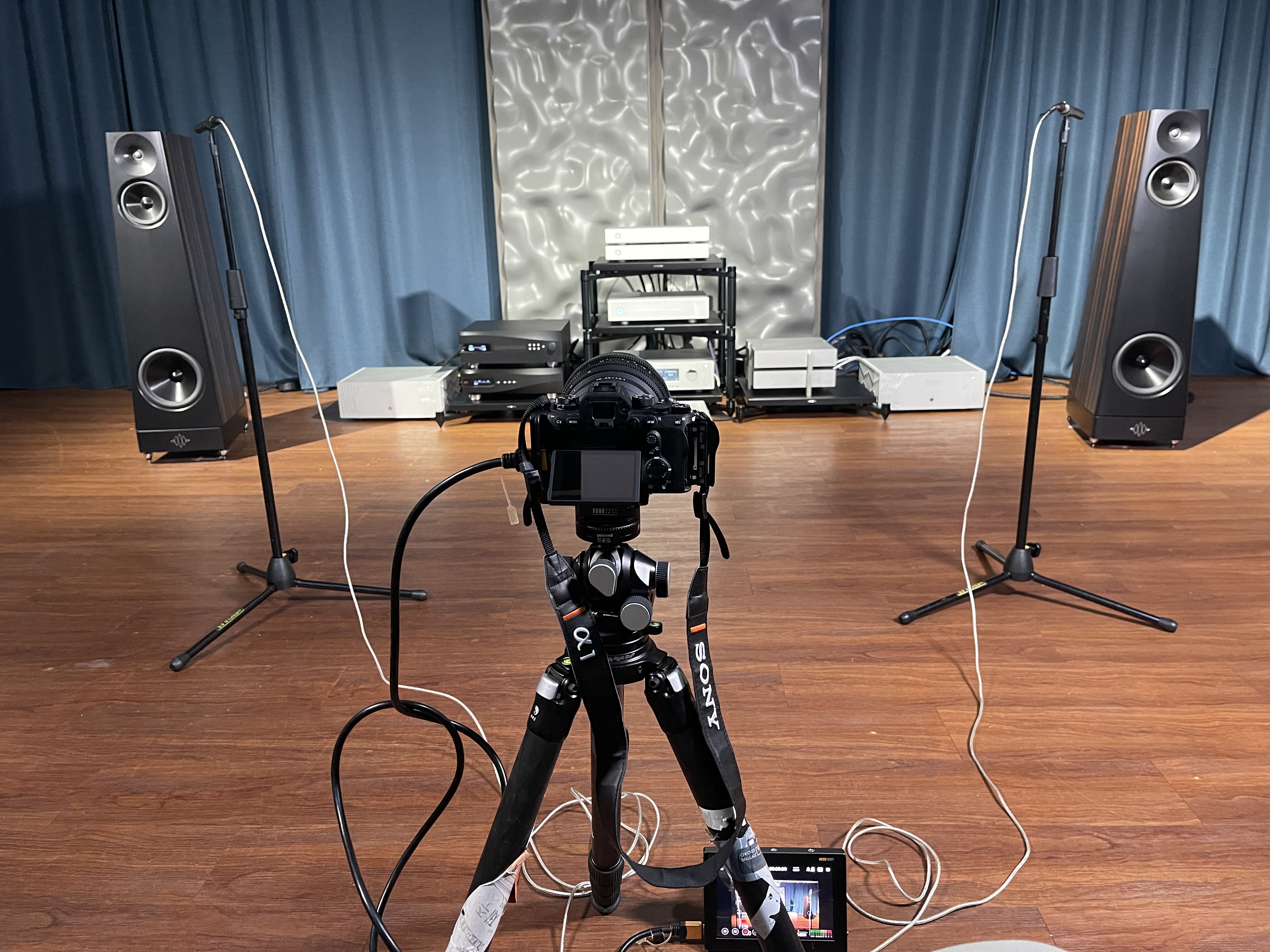
HFI recorded the system at Submarine Music & Audio on 14 October 2025. The DPA-4011 pair was positioned precisely to capture the sweet-spot sound, with a laser distance meter used to set the microphones’ distance from the loudspeakers. They fed a Zoom F8n Pro through Vertere microphone cables at 192 kHz/32-bit float, and Sennheiser HD820 headphones were used during production.
The recording lets the room become part of the musical picture. Set a natural headphone level and first locate the three solo instruments within the larger orchestral field. Then follow the line that connects them, especially when one player yields rather than announces the next phrase.
Hear the bridge, then the voices
Begin with the Largo’s job in the full concerto. Its five minutes are not an isolated slow miniature: they release the weight of the opening Allegro and point toward the Rondo alla Polacca. Listen for the moment when repose starts to feel directional, as though the finale is already present at the edge of the phrase.
On a second pass, choose one soloist and follow every hand-off. Then widen your attention until all three remain distinct inside the orchestra. The recording offers a seat for that exploration. Sit in the sweet spot with headphones and let Beethoven’s compact middle movement show how much conversation can fit inside five minutes.
Watch and listen
The complete HiFi Immersion video
For the clearest sense of the room, listen on headphones at a comfortable, consistent level.