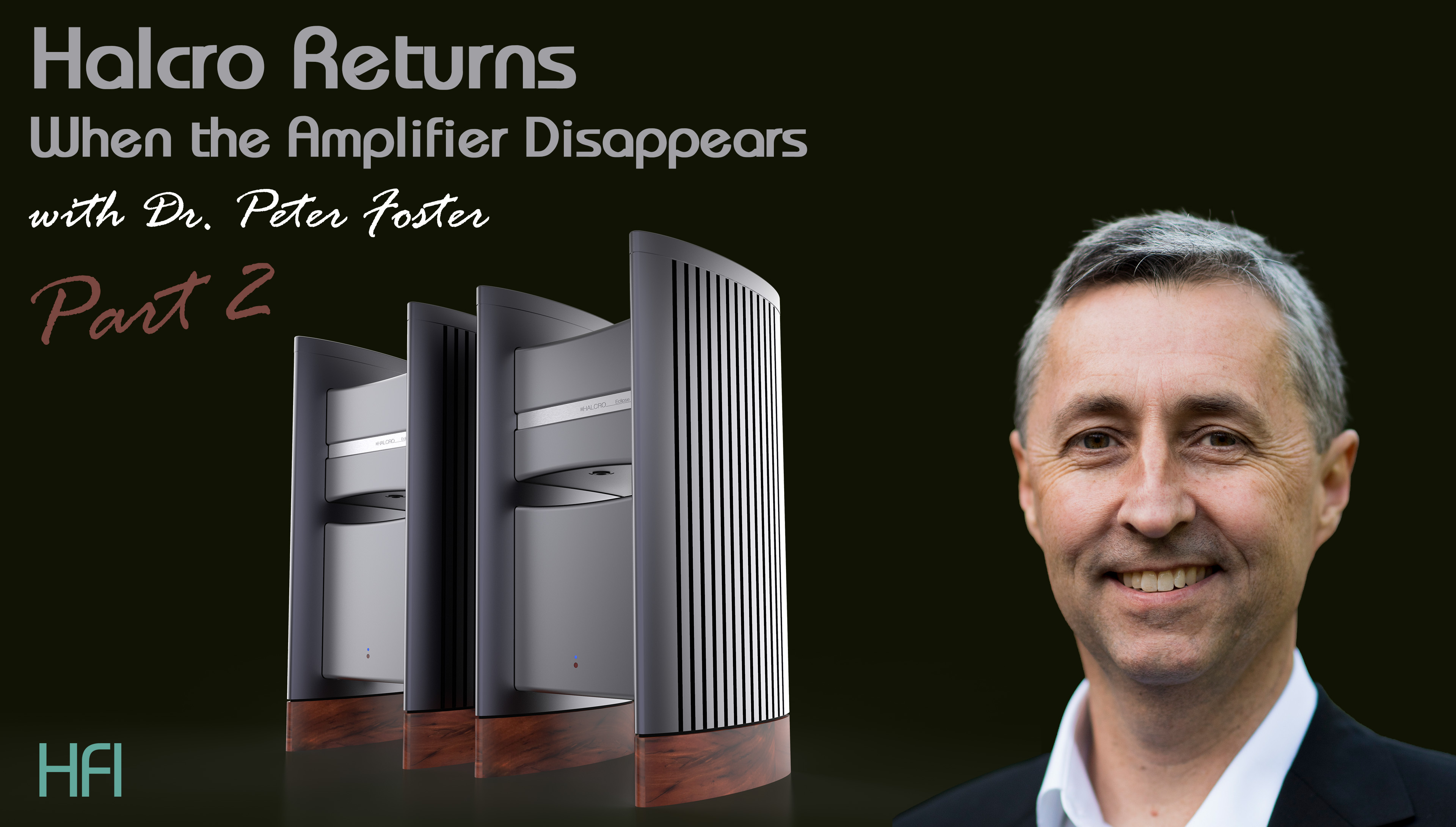
A democratic room with one final question
Peter Foster describes Halcro’s product decisions as democratic. Engineering leadership matters, he says, but no single person owns every answer; the team argues, measures and listens. When a decision remains open, music becomes the final question: does the change help the product serve the programme more convincingly?
He resists the mythology of a solitary “golden ear.” Foster’s position is that careful listeners can notice meaningful differences without belonging to an exclusive class. That does not make every preference universal. It does make listening a shared design practice rather than a badge of authority.
Why the whole track matters
Foster is wary of rapid, fragmentary A/B listening as the only decision tool. He prefers longer sessions and complete pieces, then returns to the earlier state and asks what remains persuasive over time. Musical continuity—phrasing, development, tension and release—has room to influence the judgment, even after a circuit has met its numerical target.
Ghost notes and the power beneath them
Among distortion mechanisms, Foster singles out intermodulation distortion as especially troublesome. When two frequencies pass through a nonlinear system, he explains, sum-and-difference products can appear at frequencies absent from the recording. His phrase “ghost notes” turns the mechanism into a musical question: what has the amplifier added to the harmony?
Foster also connects crossover behaviour with spatial presentation and calls the power supply the foundation beneath the amplifier stages. Those links are his engineering and listening interpretation.
How Eclipse thinking entered Equinox
Foster says the Equinox preamplifier grew from the input-stage topology developed for the Eclipse power amplifier. Halcro’s own documentation describes the Equinox as a two-box design: its power supply and control circuitry occupy one enclosure, while the audio circuitry sits in another. The company says the separation is intended to reduce electrical interference around the signal path.
Foster also points to brass, internal bracing and complementary damping materials chosen to manage resonance in the machined enclosures.
Why phono remains separate
The conversation closes on a future phono preamplifier. Foster says integrating that function would force compromises because a cartridge signal begins at such a low level, so Halcro was pursuing a separate design and a very low noise target. He also says plainly that it was too early to make performance claims.
Part 2 ends where the design itself stood at the time: the phono stage was still unfinished. What remains is a clear picture of a team moving between measurement and music while carrying Eclipse ideas into Equinox.
Watch and listen
The complete HiFi Immersion video
For the clearest sense of the room, listen on headphones at a comfortable, consistent level.