Before the anthem, a construction site
The opening guitar figure feels inevitable now, but Metallica’s own making-of archive preserves a less settled moment. Director Adam Dubin remembers the band and producer Bob Rock working while the drum sound, stacked guitars and James Hetfield’s vocal character were still taking shape. The finished track can therefore be heard not simply as a famous riff played loudly, but as a sequence of production decisions that lets one compact idea occupy progressively more space.1
“Enter Sandman” appears on Metallica, released by Elektra Records on 12 August 1991. The official song catalogue credits James Hetfield, Kirk Hammett and Lars Ulrich as its writers.
From the Cascade’s passive output to the Equinox
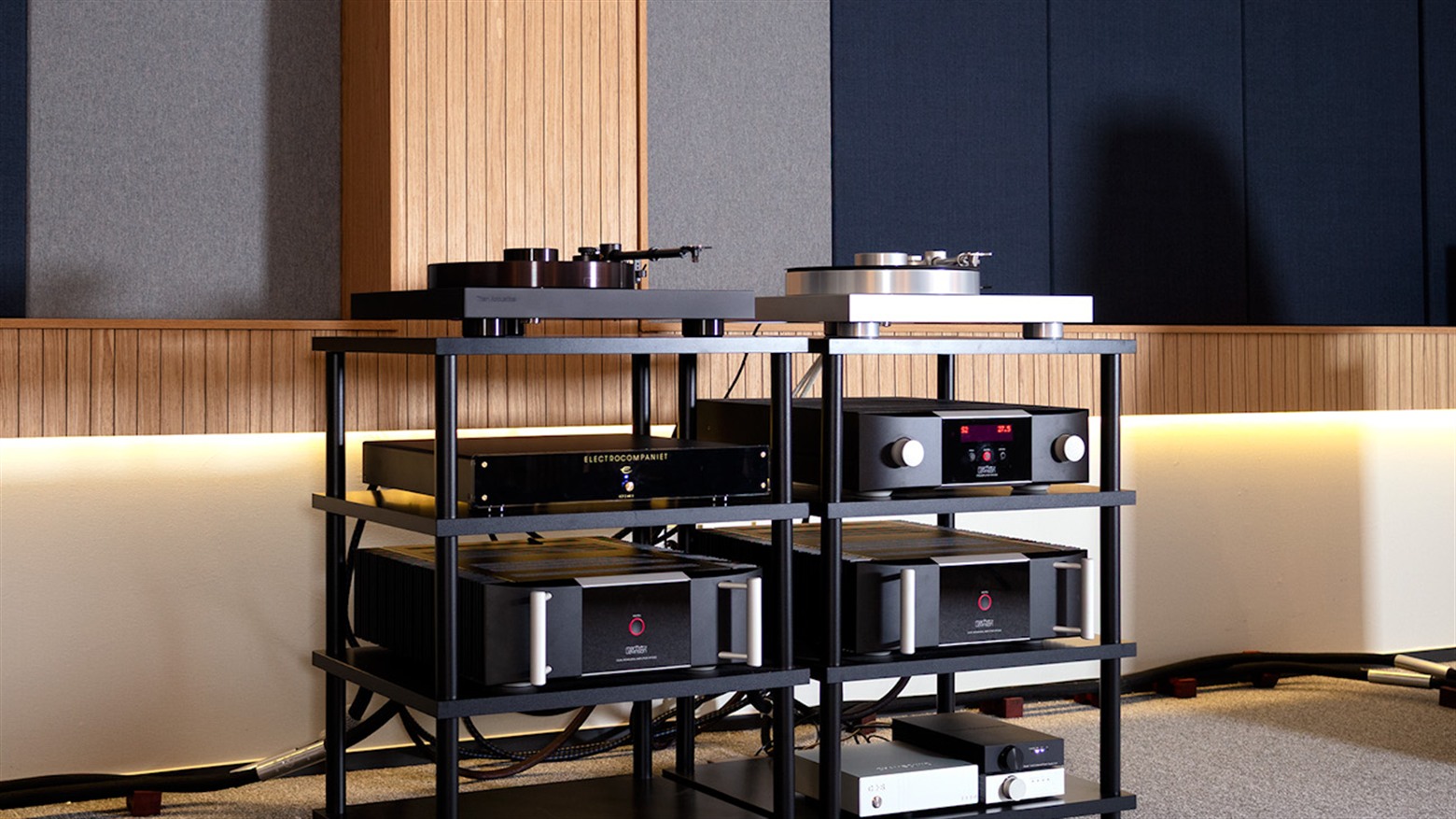
For this session, a Laufer Teknik Memory Player MP-32 fed the MSB Cascade DAC. Its output passed to a Halcro Equinox line preamplifier, then to Halcro Eclipse Mono power amplifiers driving Kharma Enigma Veyron 4D loudspeakers.
MSB describes the Cascade Analog Converter’s fully balanced output stage as passive, with a constant 75-ohm impedance and no amplifier in that stage. In HFI’s chain, the Cascade fed the separate Equinox, which handled volume control and line-stage duties.
Follow the build, not only the impact
Begin with the opening rather than waiting for the full band. Hear the repeated guitar figure against the space around it, then notice how the drums redraw the scale. As bass, additional guitar layers and voice enter, follow whether each part remains distinct or simply thickens the centre. The riff remains the anchor even as the production grows around it.1
On a second pass, follow the moments when the song changes direction. The pre-chorus ratchets up the tension, and the chorus releases it on a larger scale. Later, the child’s bedtime prayer keeps the pulse moving while the sound contracts and darkens. Stay with the pause, the riff’s return and the final surge. The track’s weight lies not in one spectacular bass hit but in the way it builds, releases and rebuilds tension.
How HFI captured the SELekt session
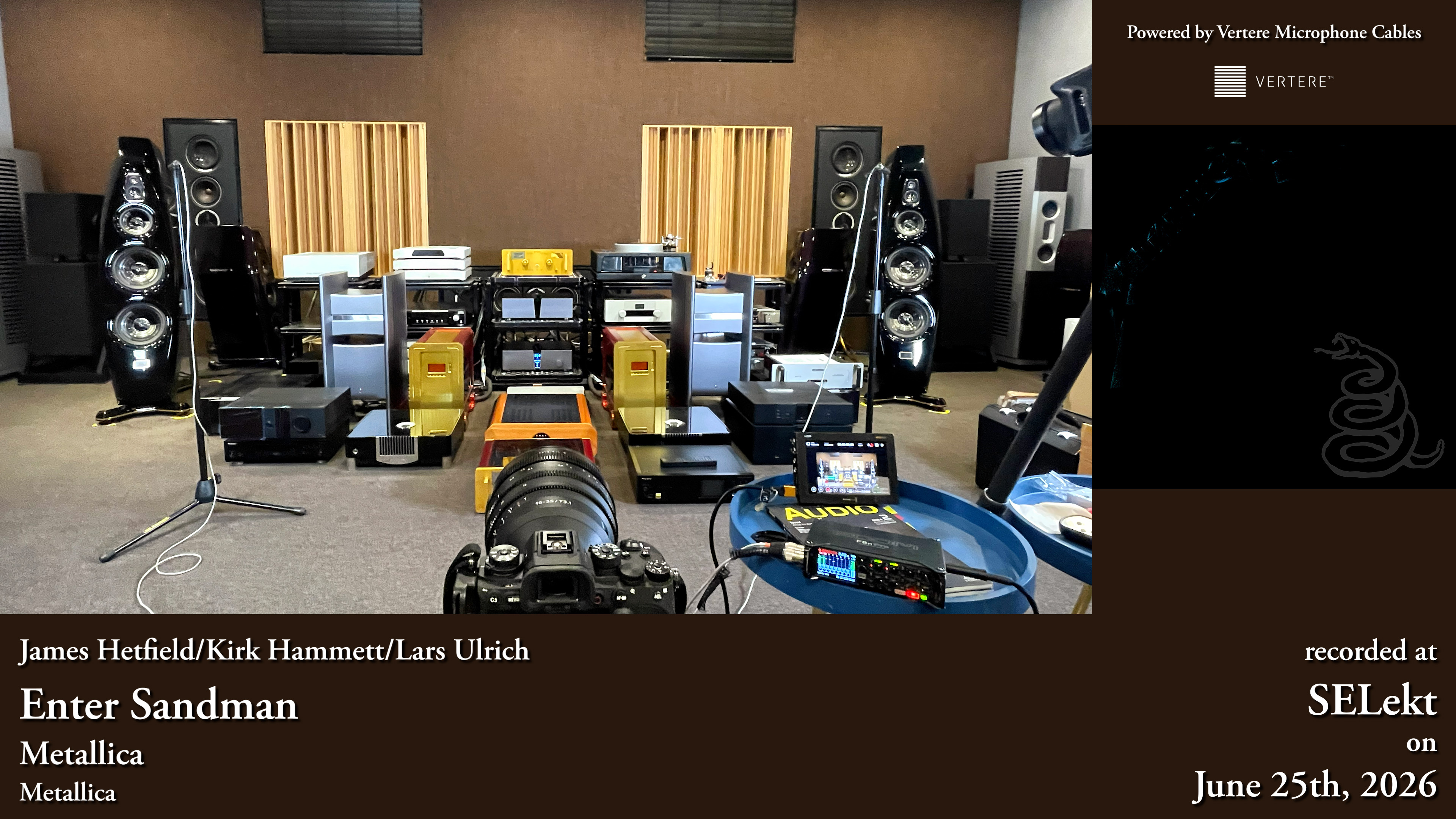
HFI made the recording at SELekt on 25 June 2026 with a matched pair of DPA-4011 microphones and a Zoom F8n Pro at 192 kHz/32-bit float. A laser distance meter was used to match the microphones’ distances from the loudspeakers at the position where that pair most closely captured the sound heard at the sweet spot. Sennheiser HD 820 headphones were used during production monitoring.
Familiarity can flatten a song into its loudest moments. Keep the level comfortable and give the quiet opening time to gather shape before the full production arrives. Headphones make it easier to follow the smaller changes inside the larger impact, from the first drum entrance to the spoken interlude and the returning riff. Sit in your own sweet spot and hear how one guitar idea gradually fills the room.
Watch and listen
The complete HiFi Immersion video
For the clearest sense of the room, listen on headphones at a comfortable, consistent level.