When the reverse side found its audience
In an interview preserved by Blondie’s official archive, drummer Clem Burke remembers “In the Flesh” as an unexpected hit in Australia after it appeared as the B-side of “X Offender.” He calls it “like a fifties ballad.” The recollection gives this early song a life beyond its original place on a single: listeners, not the running order, decided which side stepped forward.1
The official album credits present Blondie as a five-piece group: Deborah Harry on vocals, Clem Burke on drums, Jimmy Destri on keyboards, Chris Stein on guitar and Gary Valentine on bass. Begin with the song as a complete band performance rather than as a preface to the larger hits that followed. Its own audience history is reason enough to listen on its own terms.12
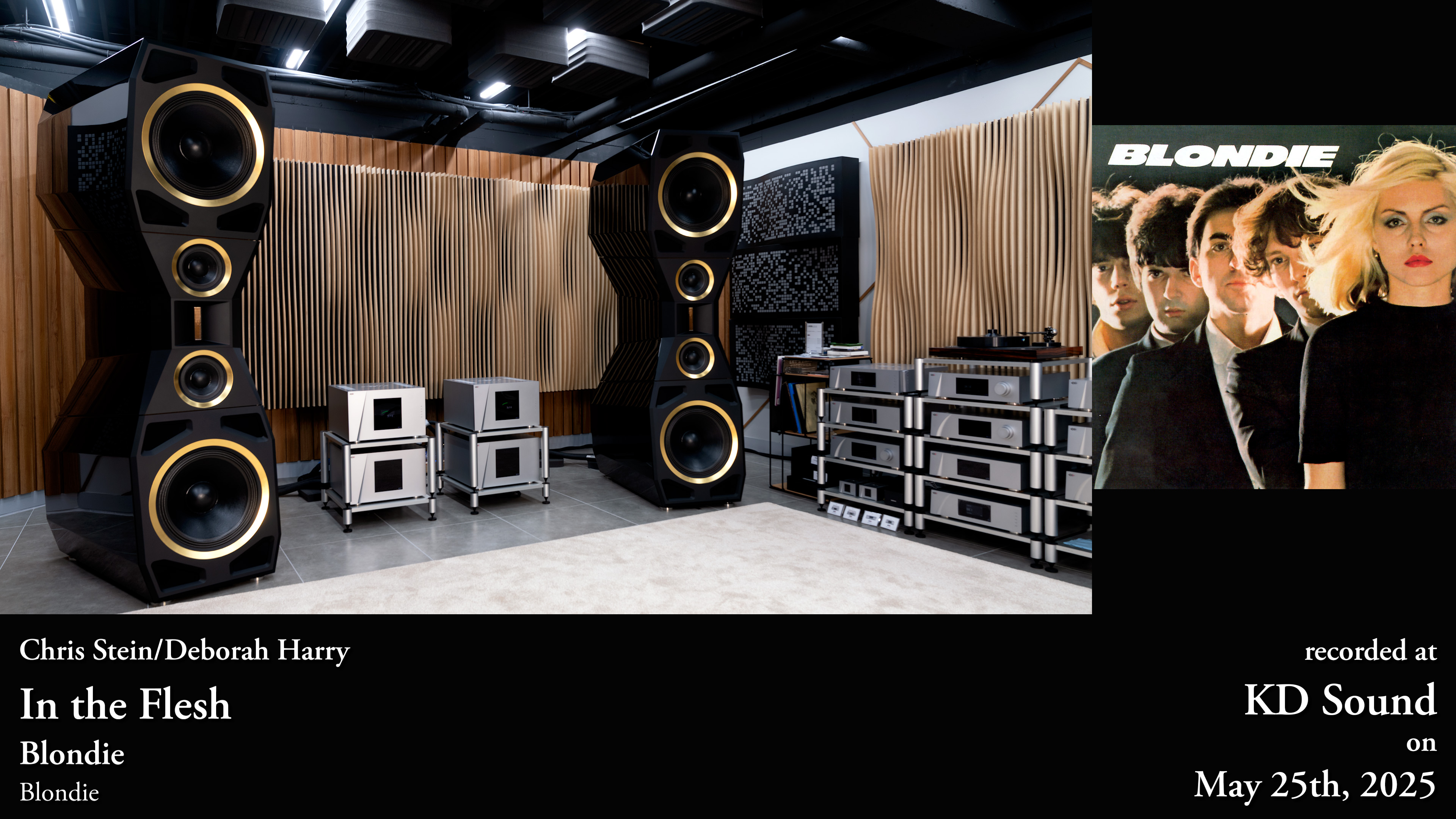
HFI used the 44.1 kHz/16-bit edition of Blondie, originally released by Private Stock in December 1976. Deborah Harry and Chris Stein are credited as the songwriters.2
Two numbers behind high sensitivity
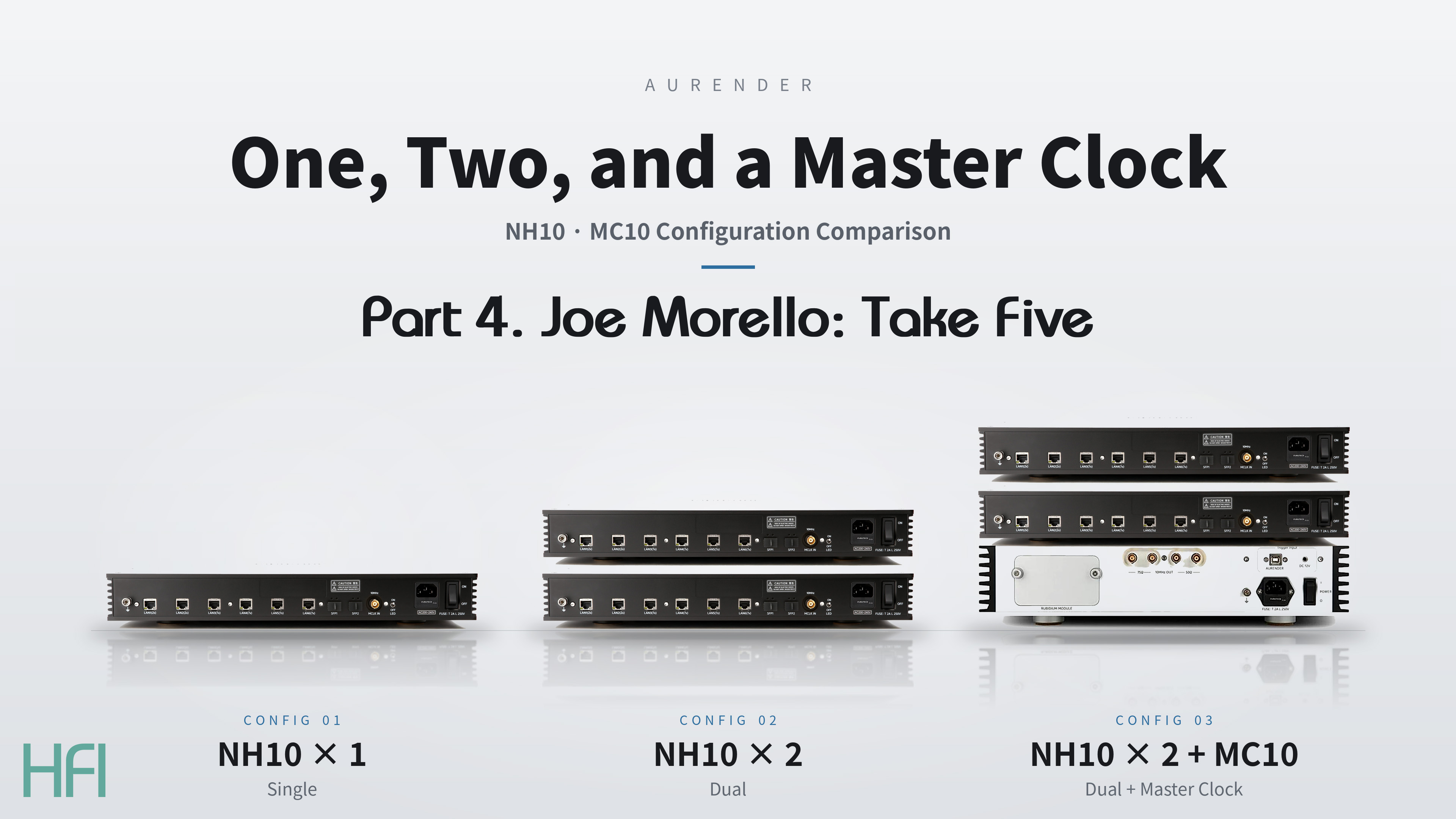
The playback chain used a CH Precision X1 external power supply, T1 10 MHz time reference, C10 digital-to-analog converter, L10 line preamplifier and two M10 stereo power amplifiers before the Göbel Divin Majestic loudspeakers.
Göbel specifies the Divin Majestic at 98 dB for 1 watt at 1 metre, with 4-ohm nominal impedance and a 3.3-ohm minimum at 100 Hz. One figure states the manufacturer’s sensitivity rating; the other marks the lowest stated electrical load. Read together, they keep “high sensitivity” from becoming a one-number shortcut for amplifier matching.3
That distinction is useful before the music starts. The loudspeaker’s physical scale is obvious in the video, but size and sensitivity do not write the listening verdict for us. The practical question is simpler: at a comfortable headphone level, can you keep Harry’s voice at the centre while the rest of the band remains part of the same song?3
A May session at KD Sound
HFI recorded the system at KD Sound in Seoul on 25 May 2025. A matched pair of DPA-4011 microphones fed a Zoom F8n Pro at 192 kHz/32-bit float, with the microphone distances from the loudspeakers matched by laser distance meter.
HFI places the matched pair where those microphones most closely capture the sound heard at the sweet spot; that microphone-dependent position is not necessarily the physical listening seat. The result is an invitation with a clear purpose: use headphones, settle into your own sweet spot and follow the musical relationships carried by the recording.
Listen first for the song’s centre
Let the first play run without turning the system into a checklist. On the second, return to Burke’s description of a 1950s-style ballad and follow the pacing of Harry’s vocal line, the spaces between phrases and the band’s responses around it. The useful question is not whether the song sounds like Blondie’s later catalogue, but how confidently this early performance occupies its own character.1
Then widen your attention. Keep the level comfortable and hear whether voice, guitar, keyboards, bass and drums remain easy to follow as one group. Repeat at a lower volume and notice which relationships still hold your attention. The recording does not ask for a winner; it asks you to sit in the sweet spot and spend a few minutes with the song that found its own side of the single.2
Watch and listen
The complete HiFi Immersion video
For the clearest sense of the room, listen on headphones at a comfortable, consistent level.